
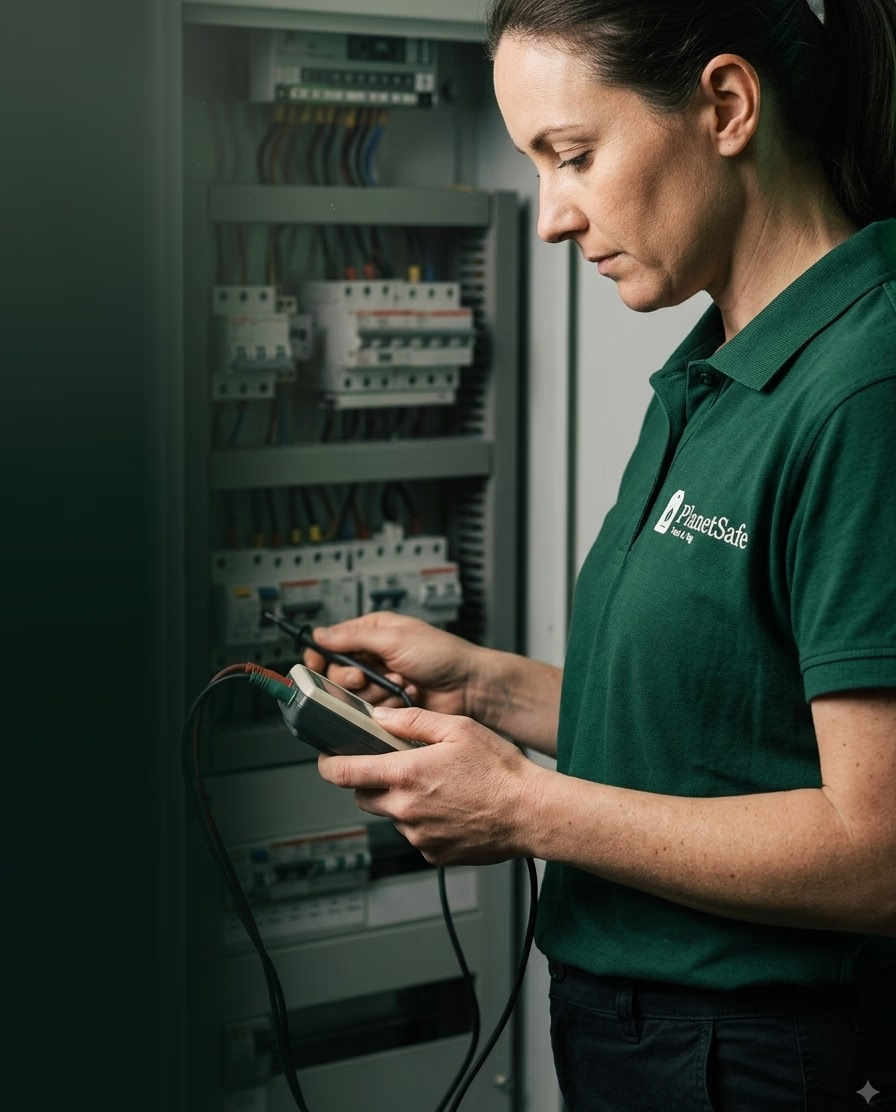
The device that saves lives needs testing too.
RCDs (safety switches) cut power in milliseconds when they detect current leaking to earth. But an RCD that has never been tested is an assumption, not a safeguard. We test them, time them, and record every result.
What does RCD testing involve?
Two tests, both required under AS/NZS 3760:2022 for workplace RCDs: a push-button test confirming the mechanical trip function, and a trip-time test measuring how fast the RCD disconnects when a fault current is applied.
Push-button test, confirms the mechanical trip function works. Required every 6 months for portable RCDs and at intervals set by the standard for fixed RCDs.
Trip-time test, measures how fast the RCD disconnects when a fault current is applied. The device must trip within the time limits set by the standard (300ms for a Type I 30mA RCD; 40ms at higher test currents for Type II). A slow RCD is a failed RCD, even if the button works.
Every RCD is recorded individually in your compliance report: location, type, trip time, result, next test date.
Do you test RCDs during test and tag?
Yes. Portable (plug-in) RCDs are tested under AS/NZS 3760:2022 as part of a standard test and tag visit, push-button, trip-time and trip-current tests using calibrated equipment, then tagged and logged. Fixed switchboard RCDs require a licensed electrician; PlanetSafe includes portable RCD testing in every visit and coordinates fixed-RCD testing where required.
Test and tag vs RCD testing.
Test and tag inspects portable appliances and cord sets to AS/NZS 3760:2022, checking each item is electrically safe. RCD testing verifies that safety switches trip fast enough to prevent electric shock when a fault occurs, using push-button and trip-time tests. The two are complementary: PlanetSafe covers both in one visit, in a single digital compliance report.
Deeper on the appliance side: Electrical test and tag services →
Most workplaces have never trip-time tested their RCDs.
The push-button gets pressed occasionally. The trip time, the thing that determines whether the device actually protects someone, almost never gets measured. If your last electrical audit didn’t include recorded trip times per device, that’s a gap. We close it during the same visit as your test and tag.
RCD testing, answered.
Where applicable, yes, RCD testing is included in PlanetSafe engagements at no separate line-item cost, and recorded in the same report.
Portable RCDs: push-button every 3 months (daily on construction sites, by the user), trip-time every 12 months. Fixed RCDs: push-button every 6 months, trip-time every 12 months. Intervals vary by environment under AS/NZS 3760:2022, we map them for your site.
It’s reported immediately to your site contact and flagged in your report. Replacement requires a licensed electrician; we can coordinate this or hand the record to your electrician.
Last updated: