
Test and tag services for Australian workplaces.
PlanetSafe provides electrical test and tag services for workplaces and multi-site organisations across Australia. Portable electrical equipment is inspected and tested, tagged with PlanetSafe’s biodegradable tags as standard, and recorded in an asset-level digital report with pass/fail results and retest dates.
What is test and tag?
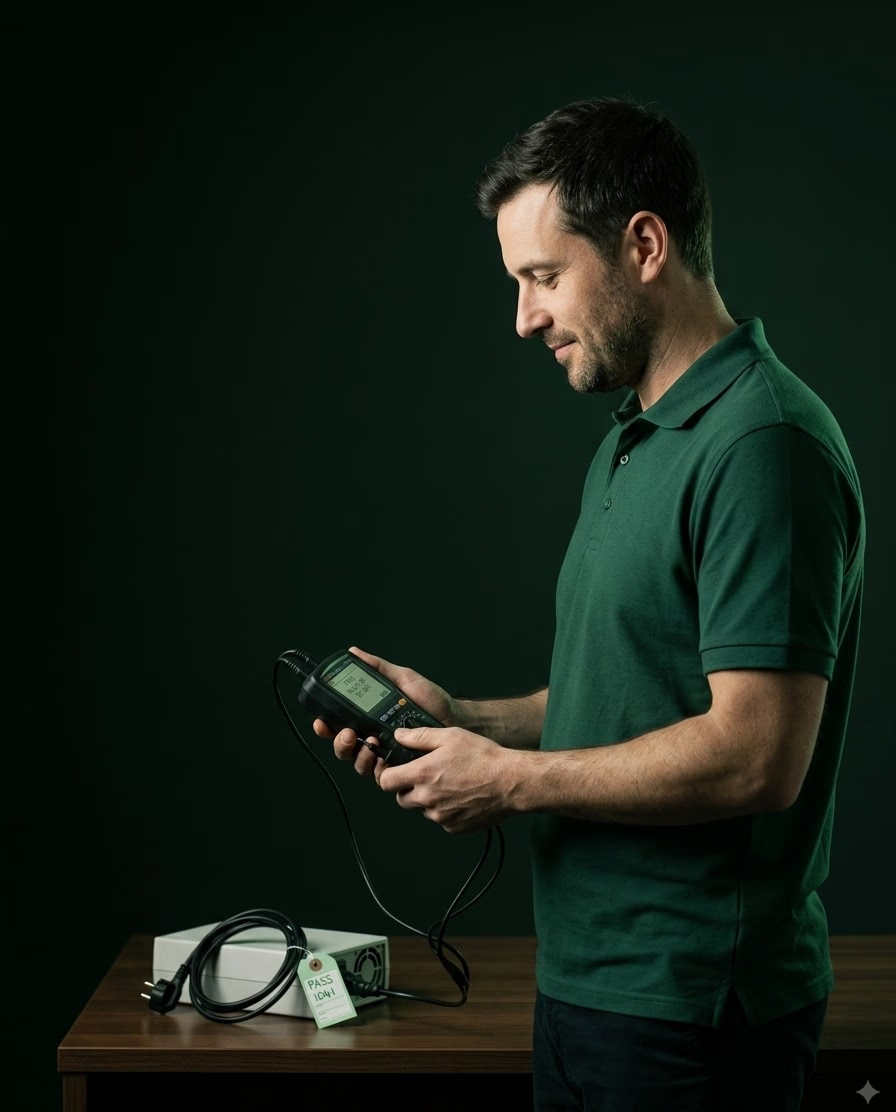
Test and tag is the in-service inspection and electrical testing of portable electrical equipment used in workplaces. It starts with a visual inspection for damage, followed by the electrical tests appropriate to the equipment, with the result recorded and the equipment identified with a test tag.
The service is also described as electrical test and tag, electrical testing and tagging, testing and tagging, or portable appliance testing services. In Australian workplaces, these terms generally refer to the same core process of inspecting and testing plug-in electrical equipment while it is in service.
The visual inspection
Around 90% of faults are found visually: damaged cords, cracked plugs, bent pins, signs of overheating. Our technicians inspect every item before it’s tested electrically.
The electrical test
Using a portable appliance tester, each item is checked for earth continuity, insulation resistance and correct polarity. Results are recorded against the individual asset, not just a site-level pass.
The tag
Every passed item is tagged with the test date, retest date and technician identifier, on a biodegradable tag that meets AS/NZS 3760 durability and labelling requirements. Plastic tags are available on request, but nobody has asked yet.
See the material evidence and claim boundaries behind PlanetSafe's tags →
Commercial test and tag for one workplace or multiple sites.
PlanetSafe provides commercial test and tag for offices, education and childcare facilities, healthcare and aged care, hospitality, warehouses, construction environments and facility-managed portfolios. For organisations with more than one location, the scope can be organised by site so testing records remain clear at asset and location level.
Managing multiple locations? See test and tag for facility-managed portfolios →What’s included in PlanetSafe’s test and tag service?
A test and tag service includes an on-site visit, a visual inspection of every item, electrical testing to AS/NZS 3760:2022 using a calibrated PAT tester (earth continuity, insulation resistance, polarity, leakage), a durable non-reusable tag on each item, and a compliance report with an asset-level register. PlanetSafe delivers the digital report after the visit.
The full step-by-step is above (visual inspection, electrical test, tag). What you receive is below (per-item register, pass/fail, next-test date). Every visit ends with the same three deliverables regardless of site size, that consistency is what auditors and insurers rely on.
What you receive after testing
Your digital record identifies the tested asset and records its result and retest date, giving the workplace a usable record of what was tested rather than relying on the physical tag alone.
How often does test and tag need to be done?
AS/NZS 3760:2022 sets retest intervals by environment, based on how harsh the conditions are:
Testing intervals vary by environment and jurisdiction. Many workplaces are mixed — an office with a commercial kitchen, a school with a maintenance workshop — so different areas within the same site can require different schedules. We map the correct interval per area and track each separately, so nothing is over-tested (wasting money) or under-tested (creating risk).
Comparing test and tag providers?
Look beyond the per-item rate. Check who will perform the testing, how test equipment is managed and calibrated, what records you will receive, how failed equipment is handled, whether the provider can cover every site you need, and what is actually included in the quoted price.
See the test and tag provider evaluation guide →Is test and tag a legal requirement in Australia?
Work health and safety regulations in every state require a person conducting a business or undertaking (PCBU) to ensure electrical equipment is safe and properly maintained. The guide to test and tag requirements in Australia sets out where that duty comes from and how it differs by jurisdiction. Testing to AS/NZS 3760 is the standard, recognised method of demonstrating that duty, and it’s what WorkSafe inspectors, auditors and insurers look for. On construction sites, testing and tagging is explicitly mandatory. In other workplaces, the practical position is simple: if an incident occurs and your equipment wasn’t tested, you carry the burden of proving your maintenance regime was adequate. A current, individually-recorded test history is that proof.
What we test.
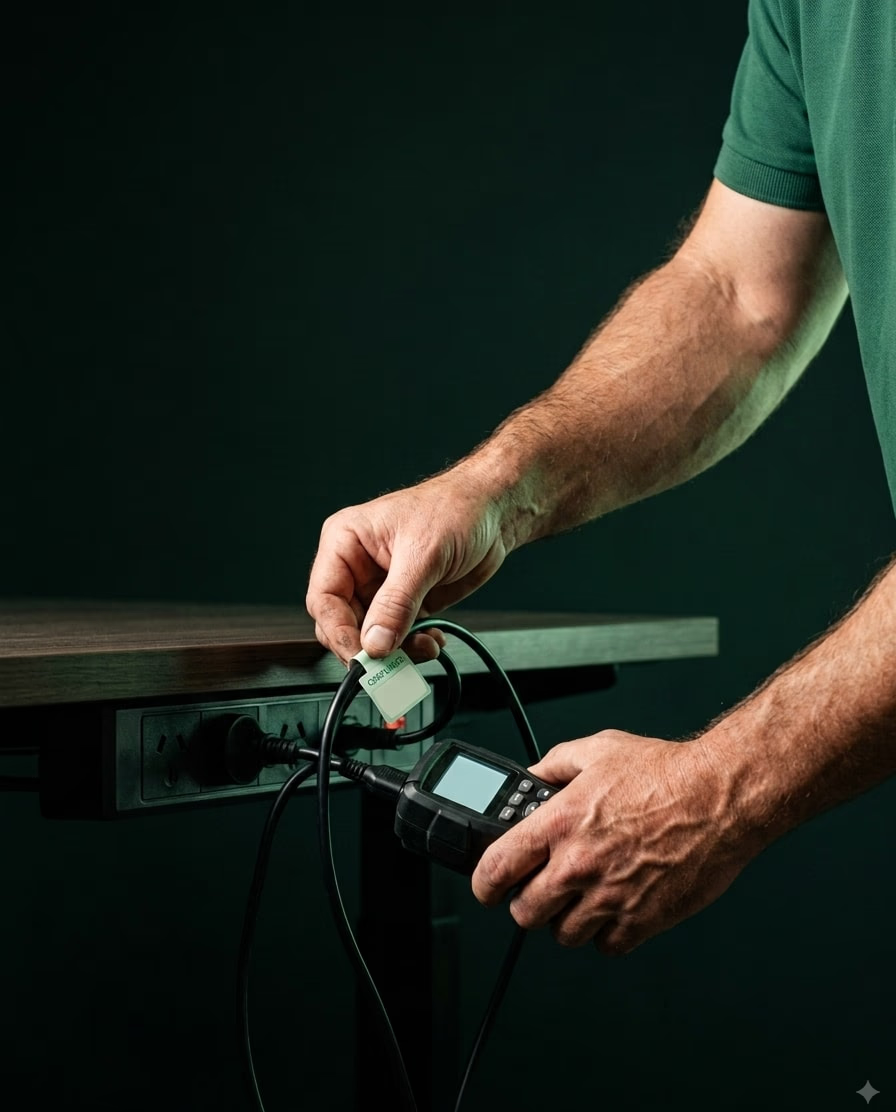
- Kettles, microwaves & kitchen appliances
- Extension leads and power boards
- Computers, monitors and chargers
- Power tools
- Cleaning equipment
- Fridges and vending machines
- Portable heaters and fans
- Workshop and trade equipment
- 3-phase equipment ($8 per item)
- Anything with a plug
Every item, individually recorded.
Test and tag vs RCD testing, what’s the difference?
Test and tag inspects portable appliances and cord sets to AS/NZS 3760:2022, checking each item is electrically safe. RCD testing verifies that safety switches trip fast enough to prevent electric shock when a fault occurs, using push-button and trip-time tests. The two are complementary: PlanetSafe covers both in one visit, in a single digital compliance report.
| Test and tag | RCD testing | |
|---|---|---|
| What it tests | Portable appliances, cord sets, power boards, chargers | Safety switches (portable + fixed RCDs) |
| What it checks | Earth continuity, insulation resistance, polarity, leakage | Trip function (push-button) and trip time (milliseconds to disconnect) |
| Standard | AS/NZS 3760:2022 | AS/NZS 3760:2022 (portable) · AS/NZS 3017 (fixed) |
| Who performs it | Competent person under the AS/NZS 3760 framework; requirements can vary by jurisdiction and type of work | Portable RCDs: competent person. Fixed RCDs: licensed electrician. |
| On the report | Every item individually recorded, pass/fail, next test date | Every RCD individually recorded, trip time, pass/fail, next test date |
| PlanetSafe delivers | Every visit | Portable RCDs every visit; fixed RCDs coordinated where required |
More on the RCD side: RCD testing services →
Common questions.
New equipment doesn’t need electrical testing before first use, but it must be visually inspected and should be tagged as “new to service” with a retest date. We handle this during regular visits.
Failed items are clearly identified and removed from service, with the failure recorded in your report. PlanetSafe does not provide electrical repair; your team can then arrange repair, replacement or disposal as appropriate.
Yes. We schedule around live operations, after-hours and weekend visits are available at no premium for most engagements.
As a guide, an experienced technician tests 25–40 items per hour depending on access. A 200-item office is typically a half-day visit.
Access to the areas being tested and a site contact on the day. That’s it. We work around your team.
Last updated: